Why Dendritic Cells Still Matter — Even When They Are Gone
The difference between creating more immune activity and creating the right immune response
A criticism sometimes made of dendritic-cell cancer therapy sounds reasonable at first: Dendritic cells do not live forever. Cancer can be a long-term battle. So why use cells that may disappear relatively quickly? Why not simply activate or increase the T cells, natural killer cells or other immune cells that actually kill cancer?
The first part is true. Dendritic cells are not supposed to live forever.
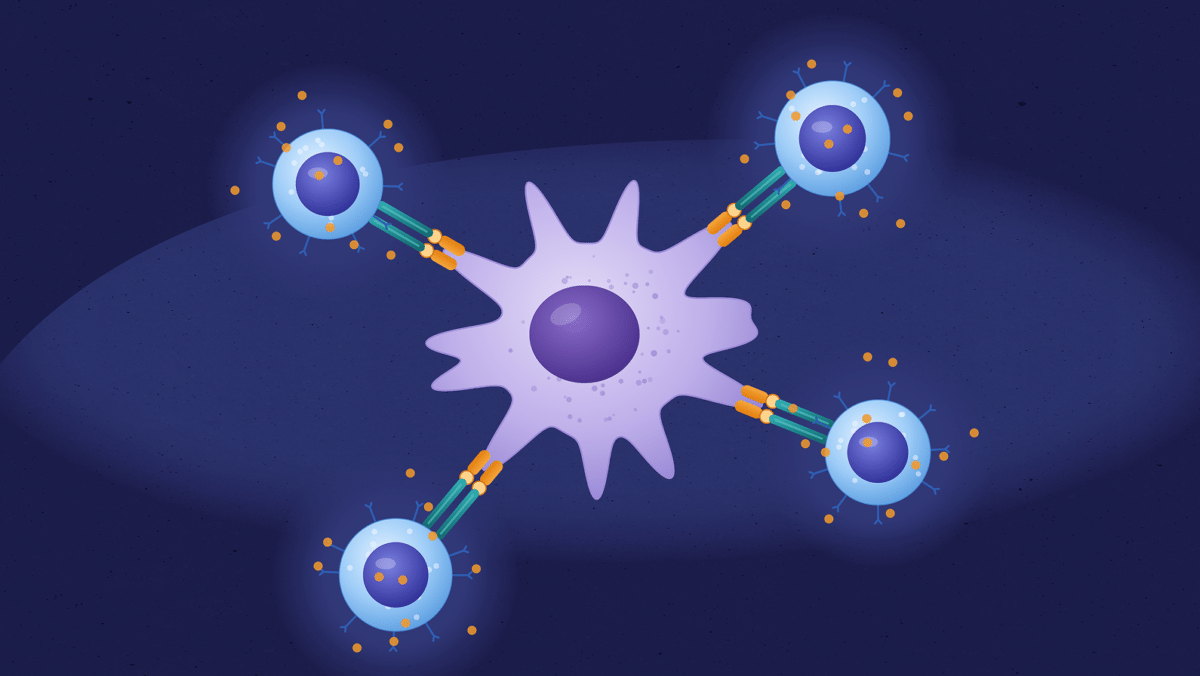
But the conclusion misunderstands their job. Dendritic cells are not primarily the foot soldiers of the immune system. They are the instructors.
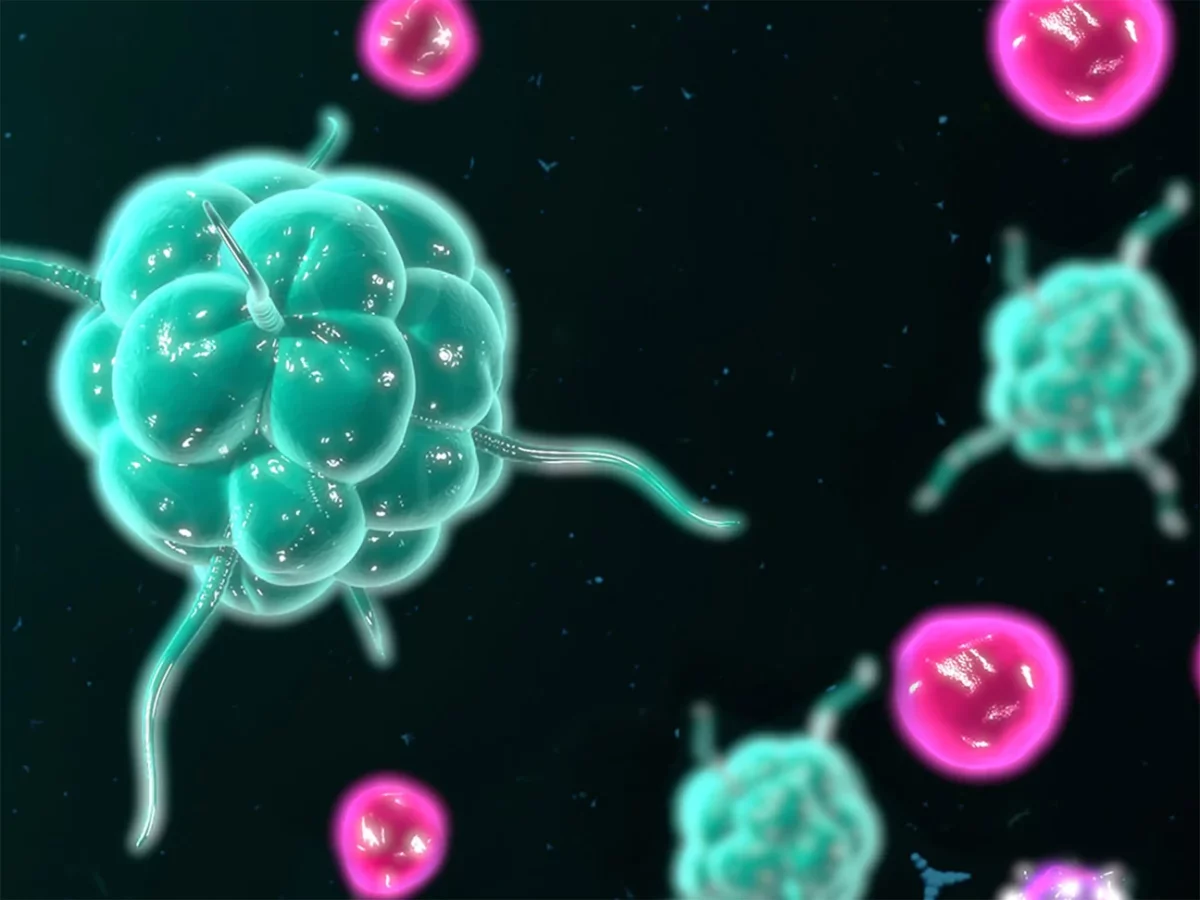
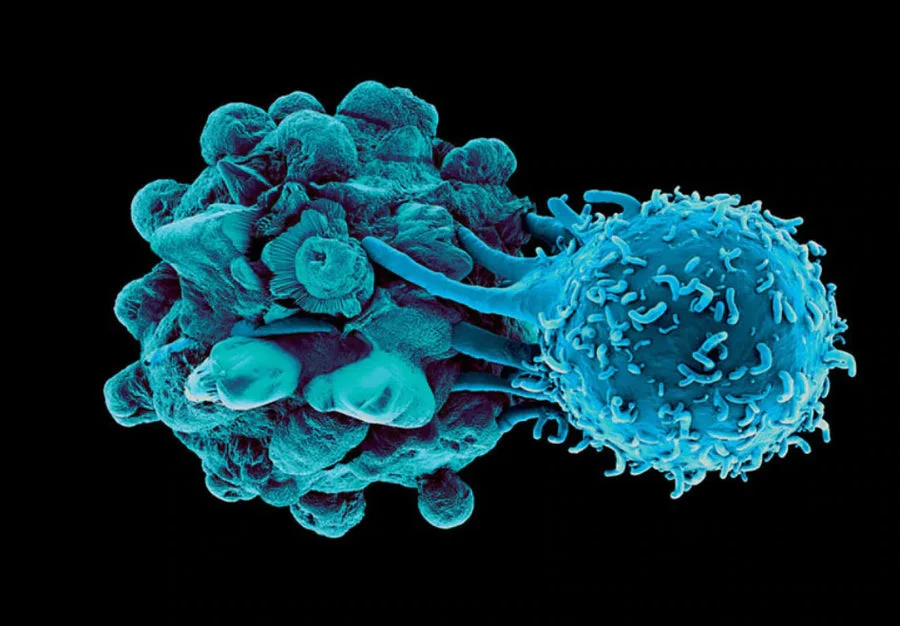
Their purpose is to collect information about a threat, process that information, and teach other immune cells what deserves to be attacked and what type of immune response should follow. Modern immunology describes dendritic cells as central “orchestrators” of both short- and long-term anticancer immunity.¹
Once that education has occurred, the original dendritic cell does not need to remain alive for the immune response it initiated to continue.
The lifespan of the instructor is not the lifespan of the instruction.
What Remains After The Dendritic Cell Is Gone?
When an appropriately activated dendritic cell encounters a T cell, it provides much more than a general signal to “wake up.”
It shows the T cell what to recognize, provides important activating signals, and helps determine what type of T cell that cell will become.
An appropriately educated tumor-reactive T cell can then multiply dramatically — a process called clonal expansion.
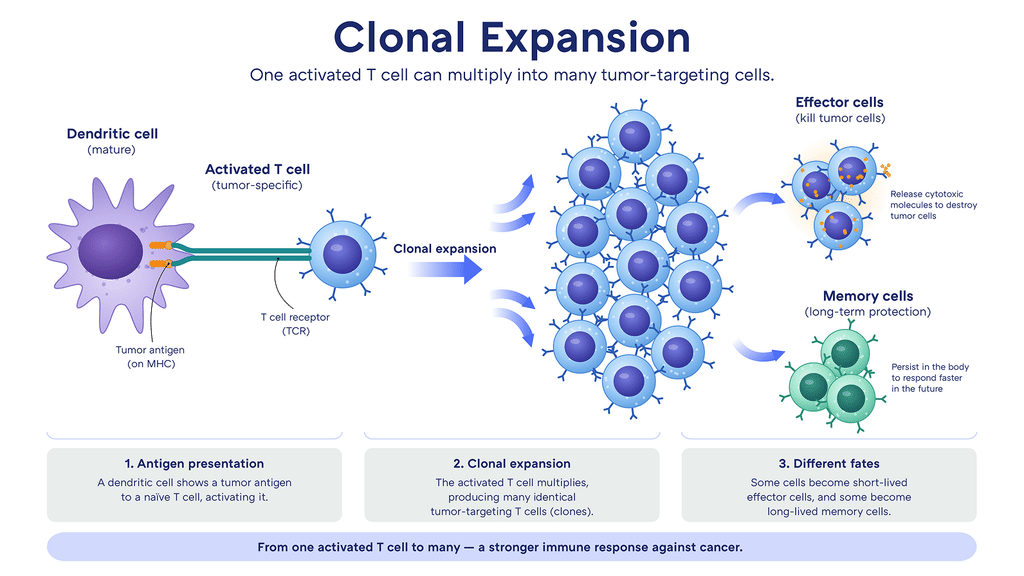
Some of those cells become immediate fighters.
Others can become memory T cells, capable of persisting and responding long after the dendritic cell responsible for the original instruction has disappeared. This is a fundamental feature of adaptive immunity and vaccination.²
That is why asking how long an administered dendritic cell survives misses the more important question.
The question is: What did that dendritic cell create while it was there?
Did it help generate cancer-relevant T cells? Did those cells expand? Did they become effective killers? Did they form memory?
Those downstream cells — not the original dendritic cell — are intended to carry the response forward. And these are things we actively measure at Immunocine.

Why Not Simply Activate The T Cells That Are Already There?
This raises an equally important question. If T cells are among the cells that actually kill cancer, why not skip the dendritic-cell step and simply stimulate or multiply the T cells the patient already has?
Because: More T cells are not necessarily better T cells.
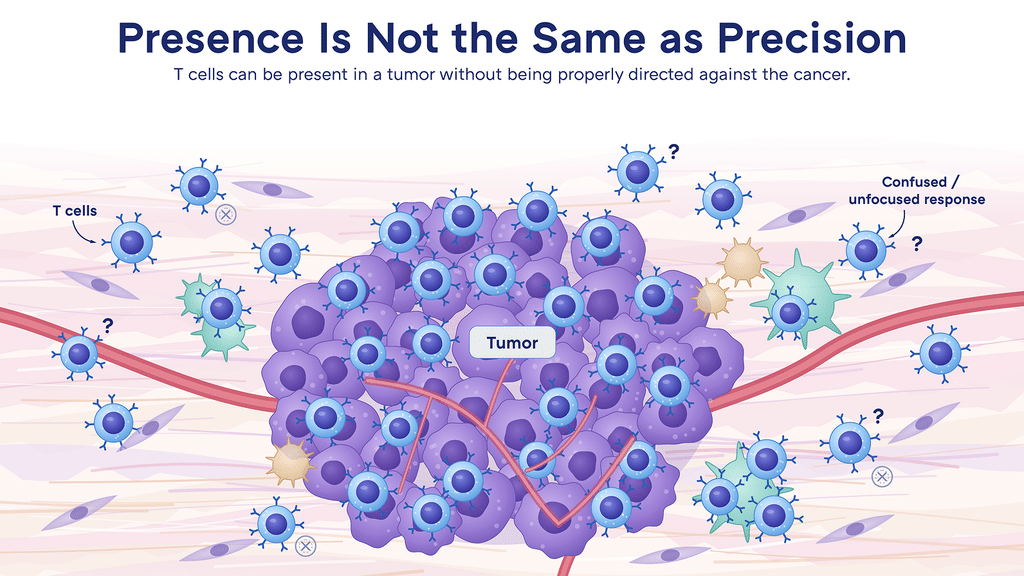
The body contains enormous numbers of T cells directed against viruses, bacteria and other things completely unrelated to cancer.
Remarkably, researchers have even found large populations of T cells inside human tumors that were not recognizing the tumor at all. Instead, some recognized unrelated viruses such as influenza, Epstein–Barr virus and cytomegalovirus.³
So simply finding T cells — or creating more T cells — does not necessarily mean creating more cancer-fighting cells.
A patient could theoretically have:
- T cells that do not recognize the cancer;
- T cells that recognize only a small part of the cancer;
- T cells that have become exhausted or suppressed; or
- Regulatory T cells whose biological function is actually to suppress immune responses.
This is why immune activation and useful antitumor immunity are not the same thing. The goal should not simply be to create inflammation or push every available immune cell harder. The goal is to generate the right immune response against the right target.
Sometimes Simply “Taking The Brakes Off” Is Not Enough
Checkpoint inhibitors such as anti-PD-1 therapies provide an excellent example.
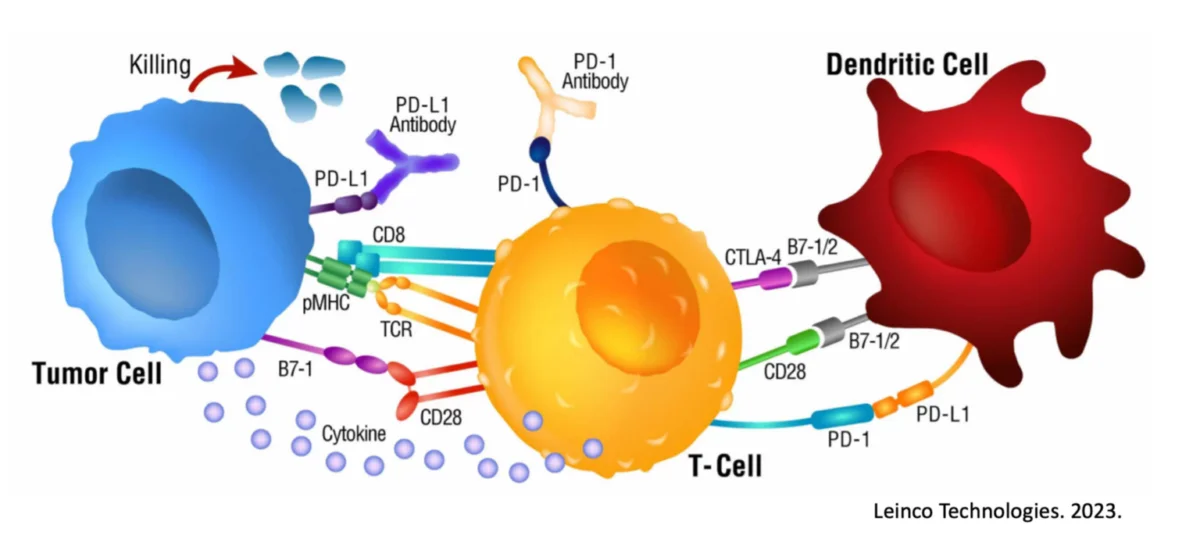
These medicines have transformed cancer care and can produce extraordinary responses. They work, in part, by releasing inhibitory signals that restrain T cells. But removing a brake does not provide all of the information required to tell a T cell what it should attack.
In fact, experimental work has shown that successful anti-PD-1 therapy itself can depend upon communication between T cells and dendritic cells. When that dendritic-cell component was disrupted, the antitumor response to PD-1 blockade was impaired.⁴
There is also an important cautionary example.
In some patients receiving checkpoint inhibitors, researchers have described hyperprogressive disease, where cancer appears to accelerate unusually rapidly. One mechanistic study found that anti-PD-1 therapy could expand a population of highly suppressive regulatory T cells in patients who developed hyperprogression.⁵
That does not mean checkpoint inhibitors usually accelerate cancer, nor does it mean dendritic-cell therapy prevents hyperprogression.
It demonstrates a simpler principle: If you stimulate an immune population, it matters which cells you are stimulating.
Taking the brakes off is most useful when the cells behind those brakes have already received useful instructions.

This Is Where Double-Loaded Dendritic Cells Become Especially Important
It is also important to recognize that not all dendritic-cell therapies are the same.
Simply manufacturing dendritic cells and exposing them to some tumor material does not guarantee an ideal immune response. This distinction has clinical relevance: in the randomized Phase III MIND-DC melanoma trial, antigen-loaded dendritic cells generated measurable tumor-specific immune responses, yet did not improve recurrence-free survival compared with placebo.¹¹
The quality of the information provided to the dendritic cell — and the way that information is presented — matters.
This is particularly relevant to the scientific work underlying Immunocine’s Double-Loaded Dendritic Cell approach.
Dendritic cells communicate with the immune system through two major antigen-presentation pathways known as MHC class I and MHC class II. Very simply:
- MHC class I is critically involved in activating cytotoxic CD8+ “killer” T-cell responses.
- MHC class II helps recruit CD4+ helper T cells that coordinate and strengthen the broader immune response.
Research beginning more than two decades ago showed that simultaneously loading dendritic cells with tumor information through both pathways could produce stronger measures of cellular immunity than less complete loading approaches.⁶
Subsequent work demonstrated something even more interesting: when related tumor information was appropriately represented through both MHC class I and class II, the dendritic cell itself appeared to recognize that relationship and shift toward a strong Th1-type cellular immune response — the type of immunity generally desired against cancer.⁷
Further mechanistic research showed that this phenomenon operates at the peptide level and involves signaling pathways including AIMP1 that help promote cellular immunity.⁸
For the lay reader, the important message is not the molecular terminology. It is this: The dendritic cell is not simply a bag carrying tumor material. How that information is presented can change the immune response that follows.
Proper double loading unlocks the misfired “failsafe” within the dendritic cell that is inhibiting proper immune recognition of the cancer.
That is the scientific rationale behind trying to provide a more complete and coordinated tumor “lesson” to the dendritic cell.
And What Happens Downstream May Matter Much Longer Than The Dendritic Cell Itself
Perhaps the most direct answer to the “dendritic cells disappear” criticism comes from research examining what happened after Double-Loaded/Th1-oriented dendritic-cell vaccination.
In a preclinical pancreatic cancer model, investigators found an unusual population of powerful cytotoxic-memory T cells associated with long-term tumor protection.
Months after treatment, the dendritic cells themselves were obviously gone. But the memory response was not.
When researchers removed a remarkably small number of these memory-like T cells from long-term survivors and transferred them to other animals, those cells were capable of providing powerful protection against tumor challenge.⁹
The instructor was gone. The fighters it helped create remained.
Subsequent research published in Science Translational Medicine examined a related human T-cell population expressing the marker CD161. These cells demonstrated a particularly interesting combination of memory, tumor-homing and powerful cytotoxic characteristics. When researchers used them to make experimental CAR-T cells, those cells showed enhanced cancer-killing capability in preclinical models.¹⁰
This data is now showing up in real patient cases, and being actively studied as it relates to long-term, durable outcomes. Trials are not yet complete, but there are fair reasons to be encouraged.
The biological principle is reinforced: The ultimate value of the dendritic cell may be measured by the quality of the immune cells it helps generate.

What About NK Cells, Macrophages And Other Immune Approaches?
They matter too. Cancer immunity is not a contest where one immune-cell type must be declared the winner.
Dendritic cells communicate with natural killer cells. NK cells communicate back to dendritic cells. Macrophages can either support or suppress antitumor immunity depending upon their state. T cells, dendritic cell, NK cells and myeloid cells participate in an interconnected biological system.
We explore the particularly interesting relationship between NK cells and dendritic cells in a companion article: Dendritic Cells and NK Cells: Partners, Not Competitors, because the interaction may actually strengthen the argument for appropriately activated dendritic cells rather than compete with it.
Likewise, approaches that isolate or expand tumor-infiltrating lymphocytes deserve their own discussion. Consider reading TIL Therapy vs. Double-Loaded Dendritic Cells: More Fighters – or better instructions?
The important point here is simpler: Cancer immunotherapy is not about having the most immune cells. It is about having the right immune cells, with the right information, in the right functional state.

The Real Question
There are legitimate questions that could be asked of every dendritic-cell therapy. After all, this is meant to be an adaptive, living immunotherapy approach against a tough foe and all answers have not been elucidated yet. But asking whether or not the original dendritic cell remains alive at an arbitrary time point is unlikely to answer any question pertaining to the actual effects or outcomes of the immune response against the cancer.
Because the dendritic cell was never supposed to personally finish the fight. Its job was to teach the immune system how to fight.
And that is ultimately why simply saying “dendritic cells disappear, so we should target the fighter cells instead” misunderstands one of the most fundamental features of adaptive immunity.
Before asking: “How can we create more fighters?” — We should first ask: “Have we adequately taught those fighters what they are supposed to fight?”
That is the biological rationale behind dendritic-cell immunotherapy — and an important reason Immunocine has focused not simply on producing dendritic cells, but on improving the information those cells receive through Double-Loaded Dendritic Cell technology.
The dendritic cell may be temporary. The immune education does not have to be.
References
1. Heras-Murillo, I. et al. Dendritic cells as orchestrators of anticancer immunity and immunotherapy. Nat. Rev. Clin. Oncol. 21, 257–277 (2024).
2. Lam, N., Lee, Y. & Farber, D. L. A guide to adaptive immune memory. Nat. Rev. Immunol. 24, 810–829 (2024).
3. Simoni, Y. et al. Bystander CD8+ T cells are abundant and phenotypically distinct in human tumour infiltrates. Nature 557, 575–579 (2018).
4. Garris, C. S. et al. Successful anti-PD-1 cancer immunotherapy requires T cell–dendritic cell crosstalk involving the cytokines IFN-γ and IL-12. Immunity 49, 1148–1161.e7 (2018).
5. Kamada, T. et al. PD-1+ regulatory T cells amplified by PD-1 blockade promote hyperprogression of cancer. Proc. Natl Acad. Sci. USA 116, 9999–10008 (2019).
6. Decker, W. K. et al. Double loading of dendritic cell MHC class I and MHC class II with an AML antigen repertoire enhances correlates of T-cell immunity in vitro via amplification of T-cell help. Vaccine 24, 3203–3216 (2006).
7. Decker, W. K. et al. Th-1 polarization is regulated by dendritic-cell comparison of MHC class I and class II antigens. Blood 113, 4213–4223 (2009).
8. Halpert, M. M. et al. MHC class I and II peptide homology regulates the cellular immune response. FASEB J. 34, 8082–8101 (2020).
9. Konduri, V. et al. Chemo-immunotherapy mediates durable cure of orthotopic KrasG12D/p53−/− pancreatic ductal adenocarcinoma. OncoImmunology 5, e1213933 (2016).
10. Konduri, V. et al. A subset of cytotoxic effector memory T cells enhances CAR T cell efficacy in a model of pancreatic ductal adenocarcinoma. Sci. Transl. Med. 13, eabc3196 (2021).
11. Bol, K. F. et al. Adjuvant dendritic cell therapy in stage IIIB/C melanoma: the MIND-DC randomized phase III trial. Nat. Commun. 15, 1632 (2024).
READ THIS NEXT

Recent Stories